As a foundational tool for building explosive power and metabolic conditioning, the kettlebell is a non-negotiable asset for any serious fitness facility. However, not all kettlebells—or the movements performed with them—are created equal. Understanding the specifics of the Russian Kettlebell and its signature movement, the Russian Swing, is crucial for brands that want to offer authentic and effective training solutions.
As a premier manufacturer of high-performance fitness equipment, Redprofitness believes that an educated buyer is our best partner. This guide provides a detailed look at the Russian Kettlebell Swing, from the muscles it activates to the safety cues that protect your clients, empowering you to invest in this powerful tool with confidence.
1. What Defines a Russian Kettlebell?
The term "Russian Kettlebell" typically refers to the traditional cast-iron kettlebell, known for its distinct shape and rugged durability.
- Material: Usually made from a single solid piece of cast iron, giving it a raw, powerful feel and extreme durability.
- Handle: The handle width varies with the weight of the bell. Its slightly thicker, less-uniform texture provides a significant grip strength challenge, which is a benefit in itself.
- Body: The shape is a simple, no-frills cannonball with a handle, designed for hundreds of functional movements.

iron kettlebell weights
This contrasts with “Competition” kettlebells, which have a uniform size and handle thickness regardless of weight, designed for high-repetition Olympic-style lifts. For general fitness and power development, the classic Russian style is the global standard.
2. The Core Movement: Mechanics of the Russian Kettlebell Swing
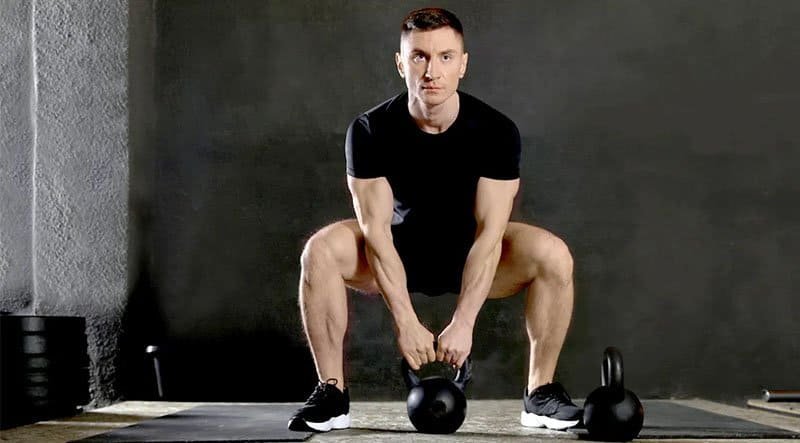
The Russian Kettlebell Swing is the foundation of all kettlebell training. It is an explosive hip-hinge movement, not a squat or an arm lift. The bell travels from between the knees up to chest height.
The power is generated from the hips, not the shoulders. Think of the body as a pendulum: the arms are just the ropes, and the hips are the force that moves the bell.
3. Primary Muscles Worked: The Posterior Chain Powerhouse
The Russian Swing is renowned for its ability to build powerful, athletic muscle across the entire back of the body.
- Glutes (Gluteus Maximus, Medius, Minimus): This is the engine of the swing. The explosive hip thrust to drive the kettlebell forward is pure glute activation.
- Hamstrings: These muscles work synergistically with the glutes, eccentrically loading during the backswing and contracting powerfully during the upswing.
- Erector Spinae (Lower Back): These muscles work isometrically to keep the spine straight and stable, transferring force from the hips to the bell.

kettlebell exercises to build muscle 4. Secondary Muscles Engaged: The Stabilizing Framework
While the posterior chain does the heavy lifting, a host of other muscles are engaged to control the movement and protect the body.
- Core (Abs and Obliques): The entire abdominal wall braces intensely at the top of the swing to prevent hyperextension of the back. It forms a rigid “plank” at the peak of the movement.
- Lats (Latissimus Dorsi): The lats are crucial for keeping the bell close to the body and controlling its arc. They act as the “brakes” on the downswing.
- Shoulders (Deltoids): The shoulders and upper back work to stabilize the bell at the top of the motion, but they should not be lifting the weight.
5. Russian Twists vs. Russian Swings: An Important Distinction
Your clients may also ask about the Russian Twist, another exercise using a kettlebell. It’s vital to understand this is a completely different movement with different goals and risks.
The Russian Twist is a core exercise where one sits on the floor, leans back, and twists the torso from side to side with the kettlebell.
- Benefits: When done correctly, it can strengthen the obliques (side abs).
- Disadvantages & Risks: The combination of spinal flexion (leaning back) and rotation under load puts significant stress on the lumbar spine. For many people, this is a high-risk exercise. Doing “100 Russian Twists a day” is ill-advised as it prioritizes volume over form, greatly increasing the chance of back injury.
While the Russian Swing is a fundamentally safe power-building exercise for most people, the Russian Twist requires significant caution.

6. Safety Tips: The Redprofitness Standard for Injury Prevention
A quality kettlebell is only effective if used correctly. Educating users on safety is paramount. Share these essential cues:
- Master the Hip Hinge: Practice pushing your hips straight back with a flat back and soft knees, as if trying to close a car door with your glutes. This is not a squat.
- Keep a “Proud Chest”: The back must remain neutral (flat) from the head to the tailbone throughout the entire movement. No rounding.
- Use Explosive Hips: The power comes from a violent “snap” of the hips forward. The arms should remain loose.
- The Bell Should Float: At the chest-height peak, the kettlebell should feel momentarily weightless. If you’re using your arms to lift it, the weight is too heavy or your form is wrong.
7. Incorporating Swings Into a Workout
Russian Kettlebell Swings are incredibly versatile. They can be used for:
- Warm-ups: Light swings to activate the posterior chain.
- Strength: Heavy swings for low reps (5-8).
- Cardio/Conditioning: Timed sets (e.g., as many reps as possible in 30 seconds) as part of a high-intensity interval training (HIIT) circuit.
Invest in Quality, Build Unshakable Power
The Russian Kettlebell Swing is one of the most effective exercises you can offer in your facility. Its ability to build muscle, burn fat, and develop explosive power is unmatched. But this powerful movement demands an equally robust tool.
A premium Redprofitness kettlebell is perfectly balanced, with a textured handle for superior grip and a single-piece casting for ultimate durability. It’s an investment in your members’ results and your brand’s reputation for quality.

Equip your facility with tools built for performance. Contact the Redprofitness team to learn more about our world-class OEM/ODM kettlebell solutions.