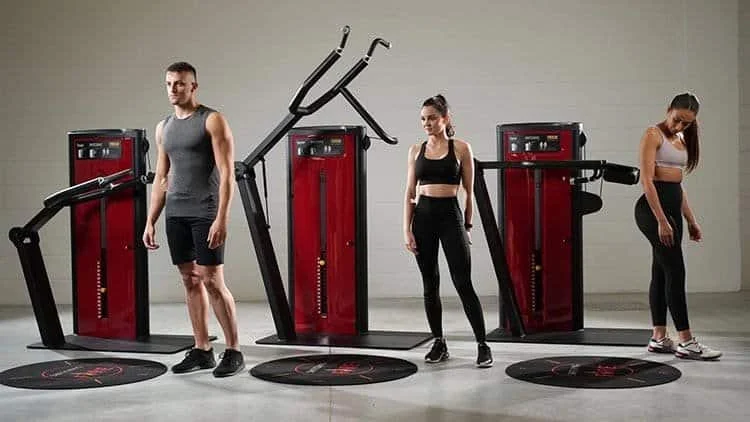


For any gym owner or facility manager, the empty floor of a new or renovated space represents both immense opportunity and a daunting challenge. The single most critical capital investment you will make is in your equipment. Get it right, and you create a vibrant, high-retention fitness destination. Get it wrong, and you’re left with a sunk cost and an empty gym floor during peak hours.
The central question always comes down to the mix: how do you allocate your budget between cardio and strength equipment?
This isn’t just about counting machines; it’s about strategic capital allocation for maximum Return on Investment (ROI). In the fitness industry, ROI isn’t just a financial metric. It’s a measure of member acquisition, satisfaction, retention, and the overall health of your business.
This guide provides a strategic framework for making that decision, ensuring every dollar you invest works harder for your bottom line. Here are the five key factors to consider when building your equipment plan.
1. Define Your Identity: Who Is Your Target Member?
Before you buy a single treadmill or squat rack, you must answer one question: Who are you trying to attract? The "perfect" equipment mix is entirely dependent on your gym’s specific business model and target demographic.
- The Big-Box Family Gym1: Your model is volume. You cater to everyone from beginners to seasoned lifters. You’ll likely need a significant cardio section (40-45% of your floor space) to accommodate general fitness seekers, along with a robust and varied strength area (30-35%) featuring user-friendly selectorized machines and a solid free-weight section.
- The Boutique HIIT/Functional2 Studio: Your members seek intense, guided workouts. Your budget should heavily favor functional strength tools: kettlebells, dumbbells, battle ropes, plyo boxes, and versatile squat racks or rigs. Your cardio might be limited to a few air bikes and rowers used specifically within class formats.
- The Hardcore Powerlifting/Strength Gym3: Here, strength is king. Your budget should be overwhelmingly allocated to free weights. Think numerous squat racks, deadlift platforms, competition-spec benches, specialty bars, and thousands of pounds in plates. Cardio is an afterthought, perhaps a few essential machines for warm-ups.
Key Takeaway: Your member profile dictates your equipment strategy. Don’t buy for a generic "gym-goer"; buy for your member.
2. Analyze Modern Trends: Where is the Market Headed?
Member expectations are evolving. While cardio remains a gym staple, the last decade has seen a massive boom in the popularity of strength training, driven by social media and a greater awareness of its benefits for metabolism, longevity, and aesthetics.
- The Endurance of Cardio4: Treadmills, ellipticals, and stationary bikes are still the most popular and utilized pieces of equipment for warm-ups, cool-downs, and steady-state training. You cannot operate a general-purpose gym without a strong cardio lineup.
- The Rise of Strength5: More members than ever—across all genders and age groups—are embracing lifting. A weak or overcrowded free-weight or strength machine area is a primary reason members leave a gym. Investing in quality racks, a wide range of dumbbells, and key selectorized machines is no longer optional; it’s essential for retention.
- The Functional Fitness Zone6: A growing trend is the “third space”—an open-turf area that blends cardio and strength. This zone, equipped with sleds, kettlebells, and functional rigs, is highly versatile and caters to the desire for more athletic, performance-based training.
3. Apply the Space Allocation Benchmark (Flexibly)
A long-standing industry rule of thumb provides a solid starting point for a general fitness center:
- Cardio Area: 40-45% of the total equipment floor space.
- Strength Area: 30-35% (this includes free weights and selectorized/plate-loaded machines).
- Group Fitness/Functional/Stretching: 15-25%
Crucially, this is a starting point, not a rigid law. Use your market knowledge (from Point #1 and #2) to adjust. If your target demographic is younger and strength-focused, you might shift to a 35% cardio / 45% strength split. The key is to ensure your layout prevents bottlenecks in high-demand areas during peak hours.
4. Prioritize the “Must-Have” Equipment First
Regardless of your gym’s model, a foundational set of equipment is non-negotiable. Allocate your initial budget to secure high-quality versions of these "must-haves," as they will form the backbone of your member experience.
-
Essential Cardio:
- Treadmills (the most popular cardio machine, period)
- Ellipticals/Cross-Trainers
- Stationary Bikes (Upright and Recumbent)
- Rowing Machines
-
Essential Strength:
- Squat Racks or Power Cages (the centerpiece of any serious strength area)
- A full Dumbbell Set (e.g., 5-100 lbs / 2.5-50 kg) with Adjustable Benches
- Barbells and a large quantity of Bumper or Iron Plates
- A core circuit of Selectorized Machines covering major muscle groups (e.g., Leg Press, Lat Pulldown, Chest Press, Seated Row, Shoulder Press)
- Cable Crossover Machine
Once these essentials are budgeted for, you can allocate remaining funds to specialty machines, functional equipment, or adding more of what you know will be popular.

5. Calculate the True ROI: Durability, Versatility, and Brand Impact
The most important factor when buying fitness equipment is not the sticker price; it’s the Total Cost of Ownership (TCO) and its impact on your brand.
- Durability and Maintenance: A cheaper machine that requires constant service and is frequently “out of order” has a catastrophic ROI. It frustrates members and incurs ongoing costs. Investing in commercially-rated equipment from a reputable OEM/ODM partner with a proven track record ensures uptime and longevity.
- Versatility: How many different members and exercises can one piece of equipment serve? A functional trainer or a squat rack has incredibly high versatility and ROI compared to a highly specialized machine that only serves one purpose.
- Member Attraction and Retention: Premium, well-maintained equipment is a powerful marketing tool. It signals quality and tells members you care about their experience. This directly impacts both acquisition and retention, which are the ultimate drivers of financial ROI.

Conclusion: Build a Balanced Ecosystem for Your Members
The cardio vs. strength debate is not an either/or proposition. A successful gym is a balanced ecosystem designed around a specific user. Your goal is to eliminate friction and empower every member to achieve their goals, whether that’s running a marathon or hitting a new deadlift personal record.
By starting with a deep understanding of your member, analyzing market trends, and investing in durable, high-quality essentials, you can move beyond simple budgeting and begin making strategic investments that will pay dividends for years to come.
Ready to build an equipment plan that maximizes your gym’s profitability and member satisfaction? Contact our facility planning experts today for a strategic consultation.
- Explore the advantages of a Big-Box Family Gym, including diverse equipment and community support for all fitness levels. ↩
- Explore this resource to discover effective strategies and insights for optimizing your Boutique HIIT/Functional studio’s success. ↩
- Discover the must-have equipment for serious strength training, ensuring you maximize your workouts and achieve your goals. ↩
- Explore this link to understand how cardio enhances endurance, vital for effective training and overall fitness. ↩
- Discover why The Rise of Strength is crucial for gym retention and how it can attract more members. ↩
- Explore this link to understand how a Functional Fitness Zone can enhance your gym’s appeal and member satisfaction. ↩