
Trying to source gym equipment but worried about overpaying? High wholesale prices can shrink your profit margins, making it hard to compete in a tough market.
To negotiate better prices, focus on bulk purchasing, long-term commitments, and optimizing product specs. Also, get multiple quotes, control your shipping costs, and build a strong relationship with a reliable manufacturer who values your partnership.
Getting a great price isn’t just about haggling. It’s about a smart, strategic approach that covers everything from product design to logistics. I help product managers like you navigate this process every day. Let’s break down the key strategies that will save you money and protect your quality standards.
How can I get the biggest discounts on my fitness equipment order?
You want the best possible price but don’t want to compromise on quality. How can you get a supplier to give you their best offer without a fight?
The biggest discounts come from volume. Increase your order size, commit to a long-term purchasing plan, and choose standardized models over custom designs. These strategies significantly reduce the manufacturer’s costs, and they can pass those savings on to you.
Volume is the most powerful negotiation tool you have. When we, as manufacturers, can plan a large production run, our efficiency skyrockets. Ordering a full 20-foot container instead of a smaller batch can lower your unit cost by 10-20%. The reason is simple: it reduces setup times, lets us buy raw materials in bulk, and streamlines our workflow.
Another powerful strategy is a long-term partnership. If you can provide a forecast for the next 12 months, we can offer a better price. This predictability helps us manage our production lines and inventory. It’s a win-win. You lock in a great price, and we get a reliable partner. We always prioritize our long-term clients, often giving them an extra 5-10% discount because we value the relationship.
| Strategy | Potential Savings | Why It Works |
|---|---|---|
| Increase Order Volume | 10-20% | Economies of scale in production and material buying |
| Long-Term Contract | 5-15% | Predictable demand allows for better planning |
| Choose Standard Models | 5-10% | No custom engineering or tooling costs required |
Where do most gyms and brands get their equipment?
Trying to find a supplier but overwhelmed by the options? Sourcing directly can seem risky, but resellers add a huge markup, eating into your profits.
Most successful gyms and top-tier brands don’t buy from local resellers. They partner directly with an OEM/ODM manufacturer in China, like us. This cuts out the middleman, giving them direct control over quality, design, and, most importantly, price.
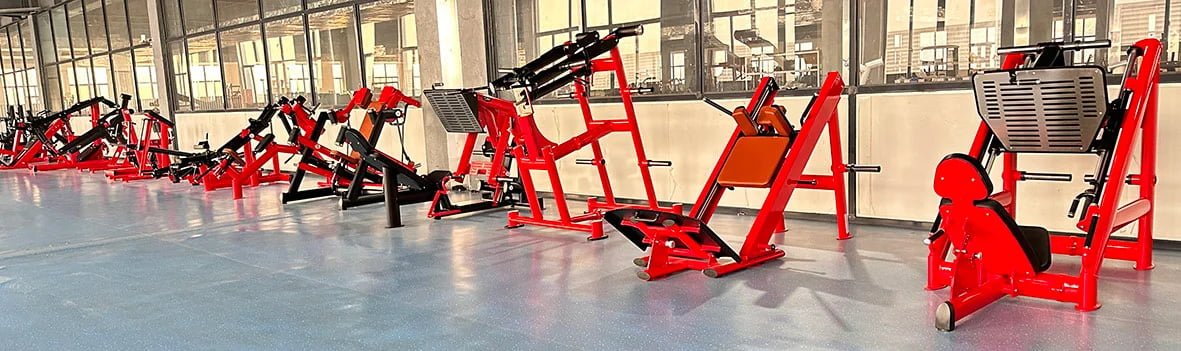
The typical supply chain has many layers. A local distributor buys from a national importer, who buys from the manufacturer. Each one adds their own margin. By going direct, you skip all of them. This is how the biggest brands maintain their profitability. As an OEM/ODM provider, we are the factory. We build the equipment for many of the brands you see in premium gyms. When a product manager partners with us, she gets factory-direct pricing. This can be 30-50% lower than buying through a distributor. Sourcing direct also gives you full control. You can customize the equipment with your own branding, choose specific colors, and even adjust functional designs. This isn’t possible when you buy off-the-shelf from a reseller. It is the key to creating a unique product line that stands out.
How do gyms decide what equipment to buy and how much they pay?
You have a budget but aren’t sure how to allocate it. How do you balance the cost of equipment with the quality and features your customers demand?
Gyms and brands decide by balancing cost, durability, and target market. A commercial gym pays more for heavy-duty equipment built for constant use. A budget home-gym brand might choose simpler models. The price they pay is negotiated based on volume and specifications.
A smart purchasing decision is all about matching the product to the market. We manufacture equipment across a wide spectrum of specifications. A premium gym chain will select our top-of-the-line products with high-strength steel and advanced features because they know the equipment will be used 16 hours a day. They pay more upfront but save on maintenance and replacement costs. The final price they pay is a result of careful negotiation. They don’t just accept the list price. We work with them to find cost savings. For example, we might use a standardized powder coat color instead of a custom one, or we might adjust the packaging for sea freight to be more economical. These small changes can add up to significant savings without compromising the core quality and safety of the machine. The key is to have an open conversation with your manufacturer about your budget and needs.
What is the smartest way to negotiate with a supplier?
You feel awkward when it comes to haggling. How do you negotiate confidently and get a better deal without damaging your relationship with the supplier?
Smart negotiation isn’t about being aggressive. It’s about being prepared. Research market prices, understand your own shipping costs by choosing FOB terms, and be open to flexible payment options. A good supplier wants a long-term partner, not a one-time sale.
Preparation is everything. Before you even talk to us, get quotes from at least two other suppliers. This gives you a baseline for what a fair market price is. When you negotiate, don’t just ask for a lower price; come with solutions. One of the best tactics is to take control of your logistics. Ask for an FOB (Free On Board) price1 instead of CIF (Cost, Insurance, and Freight)2. With FOB, the price only covers getting the goods to the port in China. You then hire your own freight forwarder. This almost always saves you money because we, as manufacturers, would just add a buffer to the shipping cost. Another great tactic is to ask about payment terms3. Offering a slightly higher deposit (e.g., 40% instead of 30%) might get you a small discount on the total price. It shows you’re a serious, low-risk partner.
Conclusion
Negotiating wholesale prices is a skill. With preparation, volume, and a strong partnership, you can secure great deals that boost your bottom line without
-
Understanding FOB pricing can help you save on shipping costs and negotiate better deals with suppliers. ↩
-
Understanding CIF is crucial for effective shipping negotiations and cost management. ↩
-
Exploring payment terms can reveal strategies to secure discounts and improve your negotiation position. ↩