
In the world of premium fitness, equipment selection is a direct reflection of a brand’s commitment to excellence. Among the pantheon of strength training machines, the seated leg press stands as a non-negotiable cornerstone. It’s a foundational piece that promises power, accessibility, and results. For brand managers, procurement directors, and C-level executives in the European and North American markets, understanding the nuances of this machine is critical to making a strategic investment that enhances member experience and solidifies market leadership.
However, a surface-level understanding is not enough. Critical questions surrounding efficacy, biomechanics, and safety must be addressed before selecting a manufacturing partner. As a premier OEM/ODM provider, RedPro Fitness believes that an educated partner is the best partner. This guide will first delve into the science behind the leg press and then showcase seven specialized commercial models engineered to meet the highest standards of performance and quality.
The Expert’s Briefing: Answering Your Core Questions on the Leg Press
Before comparing models, it’s vital to establish a baseline of expert knowledge. This is the information your clients and trainers rely on, and it should form the basis of your purchasing decision.
What is a Leg Press, and Is It Truly Effective?
The leg press is a heavy-duty strength machine where the user pushes a weight-loaded platform away from their body in a seated or supine position. Its effectiveness is indisputable and lies in its unique advantages over free-weight alternatives like squats:
- Isolation and Safety1: It isolates the lower-body musculature by taking the upper body, core stability, and spinal load out of the equation. This allows users to train their legs to failure with a significantly reduced risk of injury, making it an indispensable tool for all fitness levels.
- Hypertrophy and Strength2: By providing a stable, guided path of motion, the leg press enables users to handle loads that would be impossible to manage in a free-weight squat. This superior mechanical tension is a powerful driver for muscle growth (hypertrophy) and raw strength development.
For a commercial facility, its effectiveness is measured not just in muscle fibers, but in member accession, retention, and safety.
Which Muscle Groups Does It Primarily Work?
The leg press is a compound movement targeting the entire lower body. The primary muscles engaged are:
- Quadriceps: The muscles on the front of the thigh are the main drivers of the “push.”
- Gluteus Maximus & Medius: The glutes are heavily engaged, especially with a deep range of motion.
- Hamstrings: The muscles on the back of the thigh act as dynamic-stabilizers and are engaged during the eccentric (lowering) phase.
A key detail for knowledgeable buyers: foot placement on the platform allows for targeted muscle emphasis. A higher foot placement shifts focus to the glutes and hamstrings, while a lower placement emphasizes the quadriceps. This built-in versatility is a key selling point for any high-quality machine.
The Crucial Question: Will a Seated Leg Press Grow Glutes?
Yes, unequivocally—if the machine’s design and the user’s form are correct. Glute activation is maximized by achieving a deep range of motion where the knees come towards the chest. A quality leg press must have an ergonomic seat design and a large footplate that facilitates this deep movement without causing the lower back to round or lift off the pad (a common mistake called “butt wink”). Therefore, the ability to effectively train glutes is a direct function of superior biomechanical engineering in the machine itself.
Common Mistakes to Avoid: A Manufacturer’s Perspective
From an engineering standpoint, machines are designed to be used within specific parameters. Common user errors that a well-designed machine can help mitigate include:
- Insufficient Range of Motion: Failing to go deep enough limits glute and hamstring engagement.
- Locking Out the Knees: This transfers the load from the muscles to the knee joint, creating a high risk of hyperextension.
- Lifting the Hips/Lower Back: This compromises spinal safety. A well-angled, supportive seat is crucial to prevent this.
- Using Ego Over Form: A machine with a smooth, frictionless movement encourages controlled tempo rather than jerky, momentum-based lifts.
Understanding these points is the first step. The second is selecting equipment engineered to execute them flawlessly. The following RedPro Fitness models are designed with these exact principles in mind.
7 Commercial Leg Press Models Engineered for Excellence
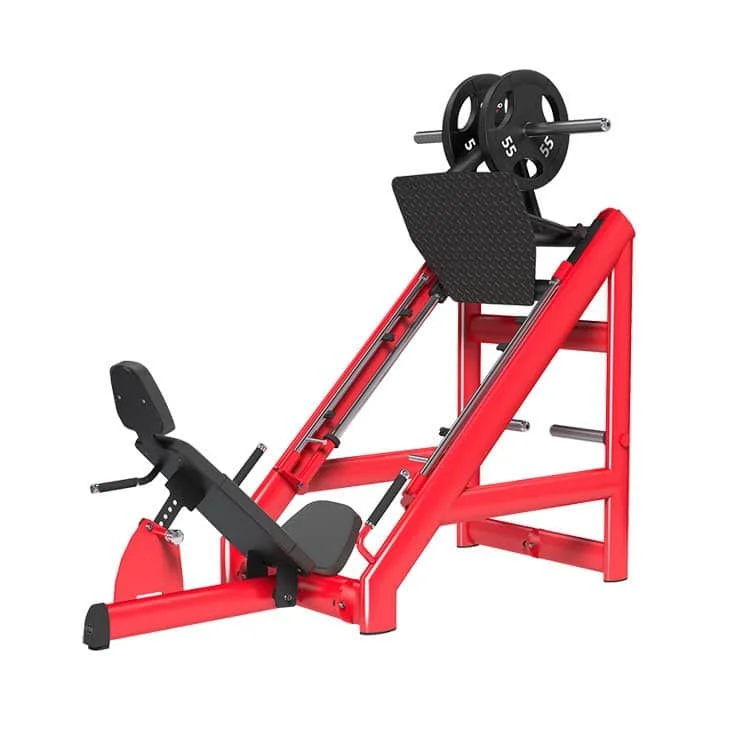
1. The Industry Benchmark: 45° Plate-Loaded Leg Press
- Best For: High-traffic commercial gyms, performance centers, and facilities catering to serious lifters.
- FOB Price Range: $980–$1,350 USD
This is the gold standard. The 45-degree sled angle is the biomechanical sweet spot for heavy, compound loading of the entire lower body. Our model’s dual-rail chassis and industrial-grade linear bearings ensure a frictionless, true-to-weight feel, eliminating catching or instability. With a 1000kg+ load capacity, it is an over-engineered strategic asset built for decades of punishing use.
2. The Rehabilitation Specialist: Horizontal Leg Press
- Best For: Rehabilitation centers, private training studios, boutique wellness-focused facilities.
- FOB Price Range: $1,050–$1,450 USD
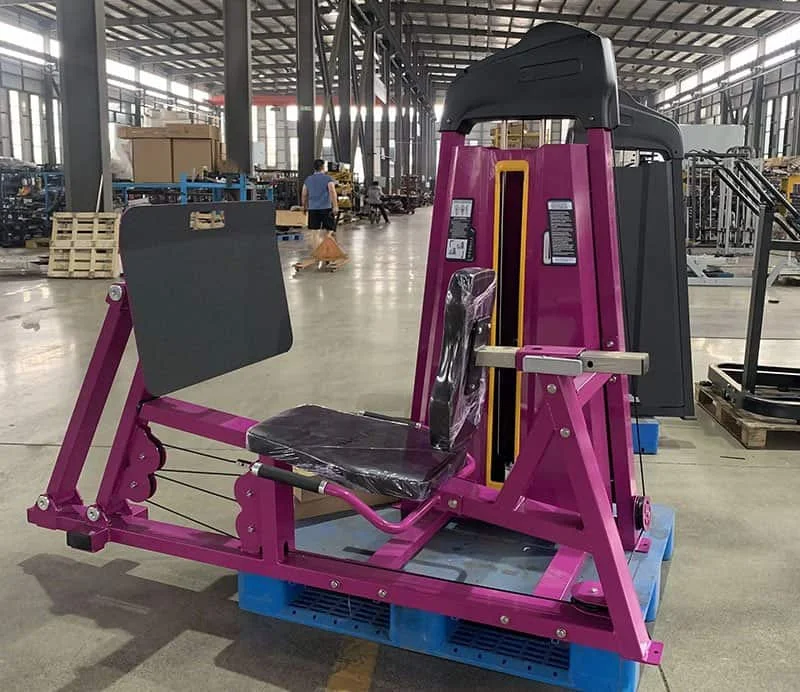
When impact is a concern, this model excels. Its fully horizontal, supine orientation places the spine in a fully supported, neutral position and dramatically reduces tibiofemoral shear forces at the knee. It’s the ideal tool for isolating the quadriceps in deconditioned individuals or for post-operative protocols. Offering this machine is a powerful statement about your facility’s commitment to inclusivity and therapeutic-grade fitness.
3. The Efficiency Champion: Selectorized Leg Press (300LB Stack)
- Best For: 24/7 franchise gyms, corporate wellness centers, and hospitality fitness.
- FOB Price Range: $1,280–$1,680 USD
Designed for speed, safety, and accessibility. The 300LB stack with a magnetic selector pin allows for one-second weight changes, maximizing user flow in busy environments. The 12-level adjustable backrest ensures precise ergonomic positioning for a wide range of user anthropometrics. This machine lowers the barrier to entry for novice users and provides the turn-key functionality essential for unmanned or high-turnover facilities.