

In the competitive landscape of premium fitness, the quality of your equipment speaks volumes about your brand. Bumper plates are not merely weights; they are a fundamental touchpoint for your clients and a direct reflection of your commitment to excellence. For discerning fitness brands, gym chains, and equipment distributors in Europe and North America, selecting the right OEM/ODM manufacturing partner is a strategic decision that impacts performance, safety, and brand reputation.
This definitive guide, brought to you by the engineering experts at Redprofitness, cuts through the noise. We will dissect the critical factors that separate elite-level bumper plates from the commodity-grade alternatives, empowering you to make an informed investment that elevates your brand.
What to Look for When Buying Bumper Plates: A 5-Point Checklist for Excellence
Sourcing high-quality bumper plates requires a nuanced understanding of material science and precision engineering. Here are the five non-negotiable factors every procurement manager and C-level executive should scrutinize.
-
Material Composition: The raw material dictates everything from durability to performance. The hierarchy is clear: Polyurethane (PU) offers the highest quality, followed by Virgin Rubber, with Recycled Rubber serving the economy sector. A premier partner will offer expertise across all tiers to match your brand’s specific positioning.
-
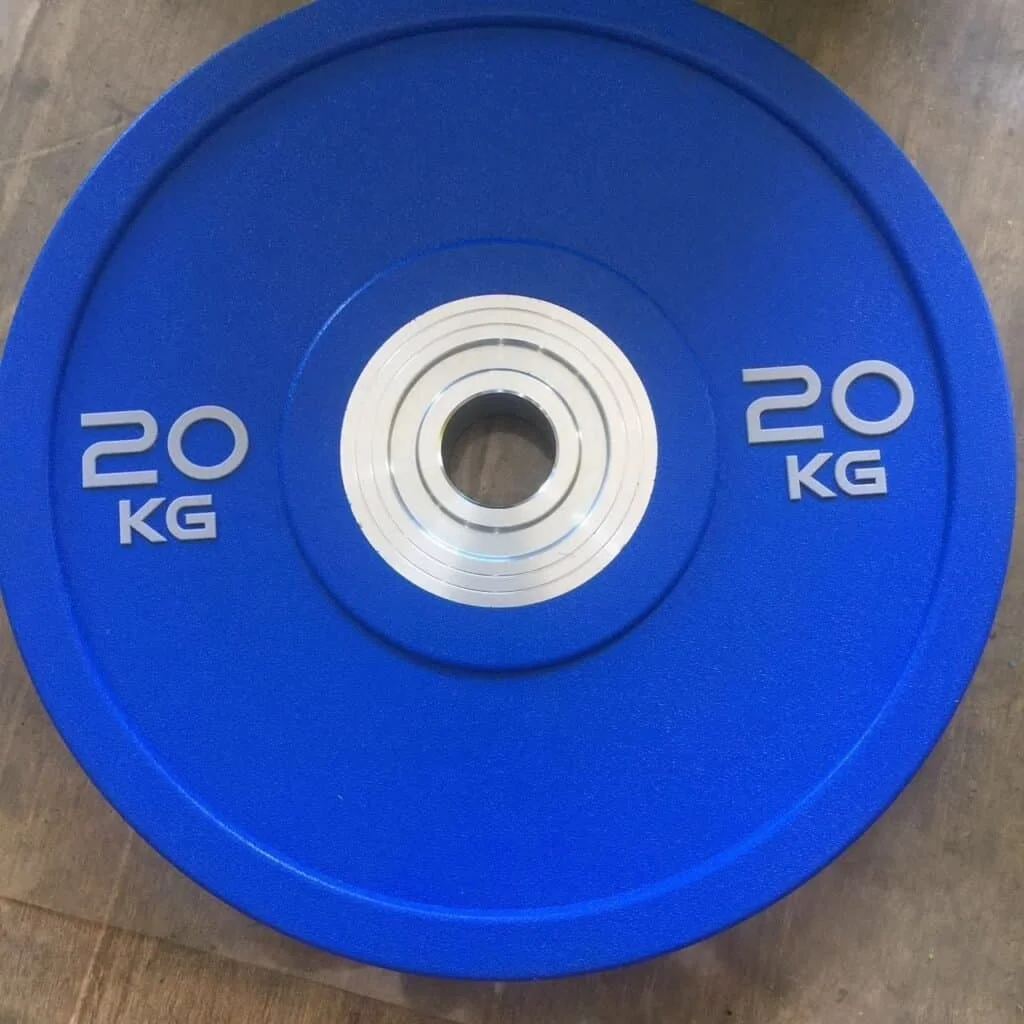
Hub Construction & Integrity: The central hub is the plate’s backbone. Elite plates feature a solid steel hub, not a cheap insert. At Redprofitness, our professional-grade hubs are precision-machined from #45 steel and often finished with chrome or zinc plating for maximum durability and corrosion resistance. Many of our premium lines now utilize stainless steel for the ultimate in longevity. A well-engineered hub contributes 40-50% of the plate’s total weight, allowing for a thinner, more dimensionally accurate profile. Crucially, it must be engineered for a snug, reliable fit on the bar sleeve to prevent shifting and ensure user safety.
-
Weight Tolerance & Accuracy: This is a key differentiator. The industry standard tolerance for many bumper plates is a wide 2-3%. For a premium brand, this is unacceptable. True performance plates adhere to stringent standards. Redprofitness manufactures its competition and premium training plates to IWF standards, ensuring a remarkable weight tolerance of just ±10 grams. This precision guarantees a balanced, reliable lift and showcases an uncompromising commitment to quality.
-
Performance Metrics (Bounce, Hardness & Bend): How a plate reacts on the drop is critical. A high, unpredictable bounce is a liability in a commercial gym setting. Hardness (measured by a durometer rating) and flex (or “bend”) contribute to the plate’s feel and lifespan. A knowledgeable manufacturer can engineer these properties to your exact specifications.
-
Certifications and Manufacturing Standards: Your partner should operate within a framework of internationally recognized standards (like IWF and ISO). This isn’t just about compliance; it’s a guarantee of a disciplined, repeatable, and quality-controlled manufacturing process from start to finish.
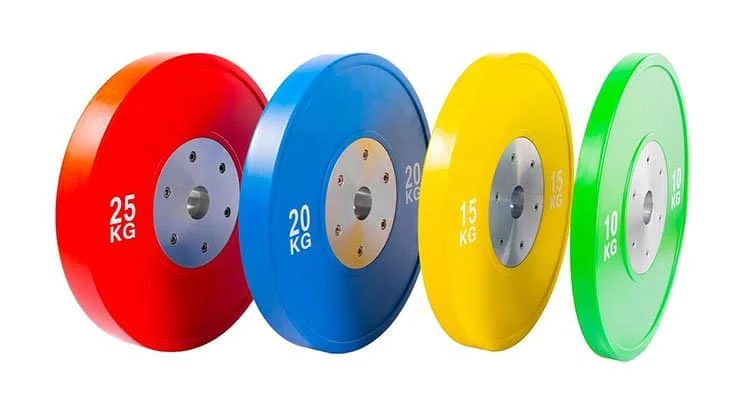
color competition plates
What Is the Best Material for Bumper Plates? A Comparative Analysis
The choice of material is a strategic one, balancing performance, aesthetics, and cost.
1. Polyurethane (PU): The Pinnacle of Performance
- Best For: Premium commercial clubs, competition venues, and brands targeting the absolute high end.
- Characteristics: Unmatched durability, resistant to abrasion, and UV degradation. PU allows for vibrant, permanent coloring and crisp logo molding. It features a “dead bounce”—extremely low and predictable—making it the safest option for high-traffic facilities. It is also completely odorless.
- Verdict: The undisputed champion for brands that refuse to compromise.
a shiny, urethane coated weight plate next to a classic cast iron plate
2. Virgin Rubber: The High-Performance Standard
- Best For: CrossFit boxes, professional training facilities, and premium home gyms.
- Characteristics: Excellent durability and a balanced performance profile. It offers a medium, predictable bounce that is ideal for Olympic lifting and repeated drops. While less vibrant than PU, color can be added. It has a low odor, which dissipates over time.
- Verdict: The workhorse of the fitness industry, offering the best blend of performance and value.
competition plates 3. Recycled Rubber: The Economy Choice
- Best For: Budget-conscious facilities, institutional settings, or entry-level product lines.
- Characteristics: Made from granulated, reclaimed rubber. It is more cost-effective but less dense and durable than virgin rubber or PU. This results in a thicker plate profile and a higher, less predictable bounce. It often carries a distinct rubber odor.
- Verdict: A functional option where price is the primary decision driver.
What are the Main Types of Bumper Plates?
Function dictates form. Understanding these categories is key to building a comprehensive product catalog.
- Competition Plates: Engineered to strict IWF specifications for diameter (450mm) and color-coding. They feature the tightest weight tolerance (±10 grams) and a large steel hub for reduced thickness, allowing more weight to be loaded onto the bar.
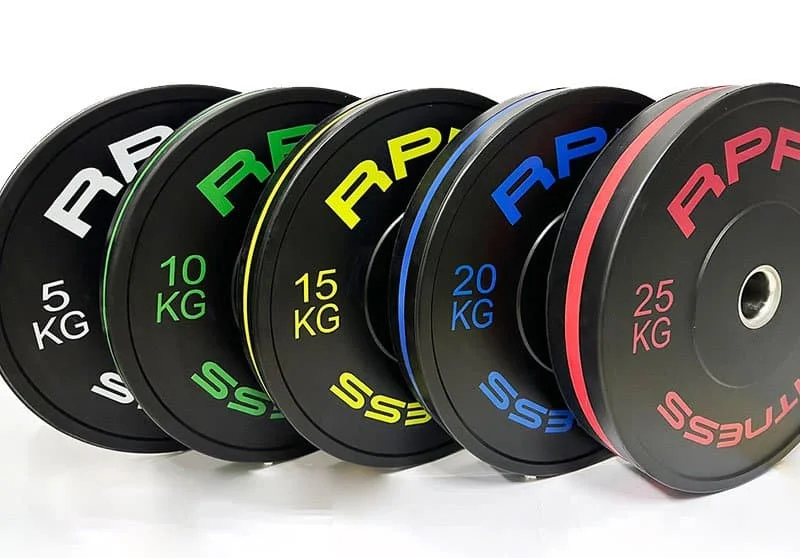
- Training Plates: The most common type, built for durability in daily, high-volume use. They typically share the same diameter as competition plates but may have a slightly wider weight tolerance. Available in all-black or with color-coding.
- Technique Plates: Lightweight (2.5kg or 5kg) yet full-sized (450mm diameter) plates made from durable plastic or light rubber. They allow beginners to practice lifting form with a standard bar at the correct height before progressing to heavier weights.
- Calibrated Steel Plates: While not bumper plates, they are part of the high-performance ecosystem. These ultra-thin, hyper-accurate metal plates are used in powerlifting to achieve maximum weight on the bar and are calibrated to within grams of their stated weight.
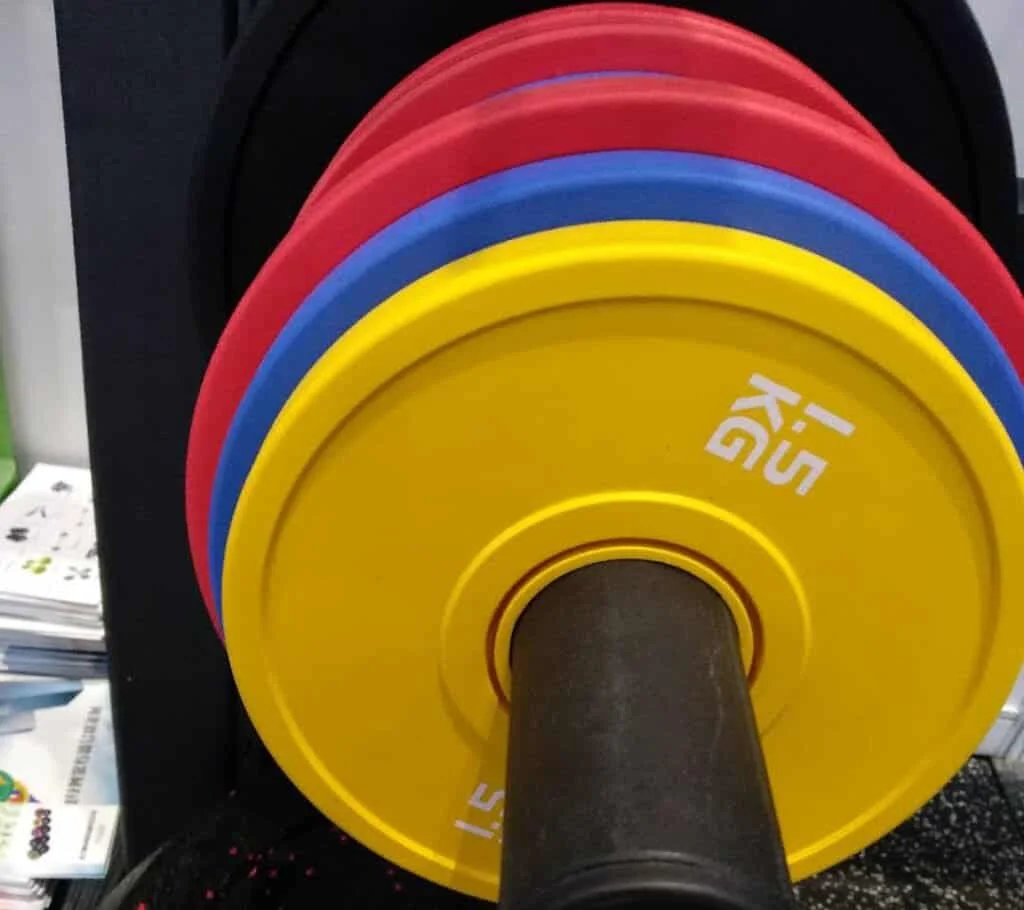
fraction plates
Performance Deep Dive: Bounce, Hardness, and Bend
This table breaks down the performance characteristics your end-users will experience.
| Plate Type | Bounce Height | Hardness (Durometer) | Bend/Flex Under Load | Ideal Use Case |
|---|---|---|---|---|
| Polyurethane (PU) | Low (“Dead Bounce”) | High (90-95 Shore A) | Minimal | Controlled training, competition, safety-first environments. |
| Virgin Rubber | Medium, Predictable | Medium-High (85-90 Shore A) | Moderate | Olympic lifting, CrossFit, general strength training. |
| Recycled Rubber | High, Variable | Lower (75-85 Shore A) | Significant | General use where dropping is infrequent or controlled. |
What are the Main Bumper Plate Industrial Regions in China?
Understanding the manufacturing geography provides insight into the supply chain. The two primary hubs for fitness equipment manufacturing in China are:
- Shandong Province (Qingdao, Rizhao): The historical heartland of China’s fitness equipment industry, known for its extensive network of raw material suppliers and experienced labor.
- Yangtze River Delta (Nantong, Shanghai): A modern and technologically advanced region known for high-tech manufacturing and streamlined logistics.
However, geography alone does not guarantee quality. The most critical factor is the manufacturer’s own infrastructure, quality control systems, and engineering expertise. Redprofitness operates two specialized factories, strategically leveraging the strengths of these regions while imposing our own rigorous global standards for quality, management, and innovation.
Conclusion: Partnering for Excellence with Redprofitness
Choosing a bumper plate supplier is a direct investment in your brand’s future. The decision hinges on a partner’s ability to deliver on the promise of precision, durability, and performance.
At Redprofitness, we are not just a manufacturer; we are an end-to-end engineering and quality assurance partner for the world’s leading fitness brands. From precision-machined #45 steel hubs and an industry-leading ±10g weight tolerance to our deep expertise in polyurethane and virgin rubber compounds, we provide the manufacturing excellence that builds brand equity.
Elevate your product line and build lasting brand value. Contact Redprofitness today to schedule a consultation and discover how a partnership with a premier OEM/ODM provider can redefine your success in the global market.