

Struggling to source the right equipment for your fitness brand? The market is crowded. We can help you understand the different types and what makes them right for your clients.
Commercial fitness equipment is broadly divided into three main categories: strength training, cardiovascular training, and functional training. Strength gear includes free weights and machines, cardio consists of treadmills and rowers, and functional equipment covers racks, kettlebells, and gear for dynamic, real-world movements.
Understanding these basic categories is a great start. But as a product manager, you need to go deeper to make smart decisions that will define your brand’s quality and appeal. You need to know which pieces are essential for different gym environments and, more importantly, what truly makes a piece of equipment “commercial grade.” Let’s break it down so you can source with confidence.
What are the categories of fitness equipment?
Confused by all the different equipment terms? It can be hard to build a product line. We can clarify the main categories for you right now.
Fitness equipment falls into three main groups: cardiovascular, strength, and functional/flexibility. Cardio builds endurance, strength builds muscle, and functional training improves overall movement patterns, making each category essential for a complete workout facility.
When we engineer products for high-end brands, we think in terms of these distinct user needs. Each category requires a different approach to design, materials, and manufacturing. Understanding them is the first step to building a balanced and effective product catalog.
Cardiovascular Equipment
This category is all about heart health and endurance. These machines are staples in any gym and are often the first thing a new member looks for.
- Treadmills: For walking, jogging, and running.
- Ellipticals and Stair Climbers: Low-impact options that are easier on the joints.
- Stationary Bikes: Including upright, recumbent, and high-intensity indoor cycles.
- Rowing Machines: Provide a full-body cardio and strength workout.
Strength Training Equipment
This is our specialty and the backbone of any serious training facility. It’s where material strength and build quality are most visible. We can further divide it into three sub-categories.
| Type | Description | Best For |
|---|---|---|
| Free Weights | Barbells, dumbbells, kettlebells, and weight plates. | Building foundational strength, muscle stabilization, and power. |
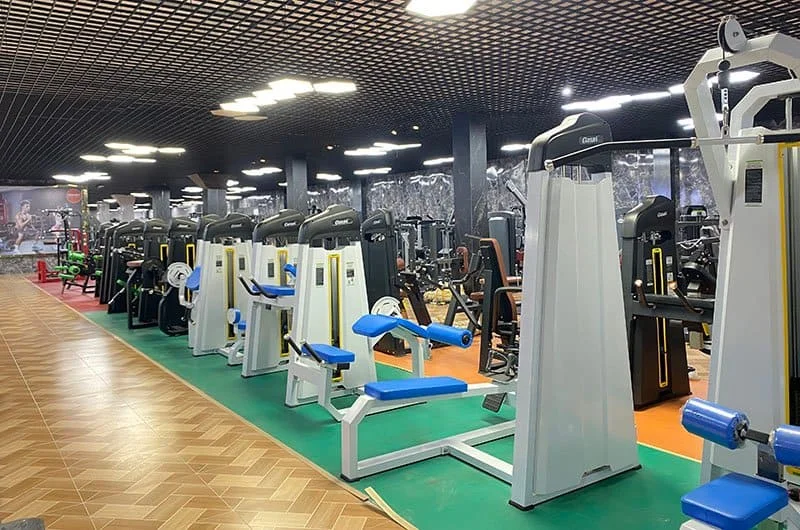
| Selectorized Machines | Equipment with weight stacks adjusted by a pin. | Beginners, circuit training, and isolating specific muscle groups safely. |
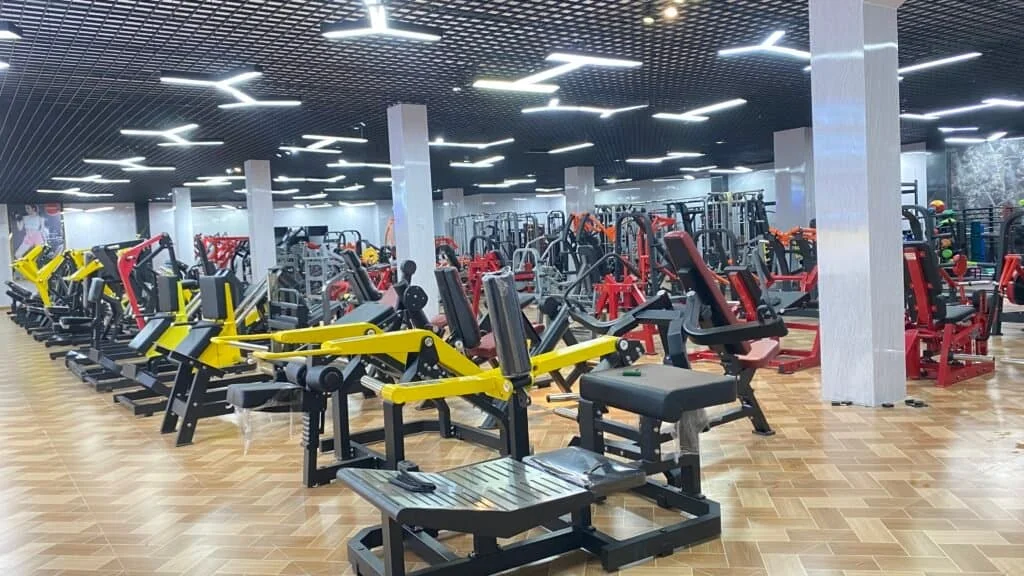
| Plate-Loaded Machines | Machines that use Olympic weight plates for resistance. | Experienced users wanting to combine machine safety with heavy loads. |
Functional and Flexibility Equipment
This fast-growing category focuses on improving movement, balance, and recovery.
- Power Racks and Squat Stands: These are the centerpiece of any functional training zone.
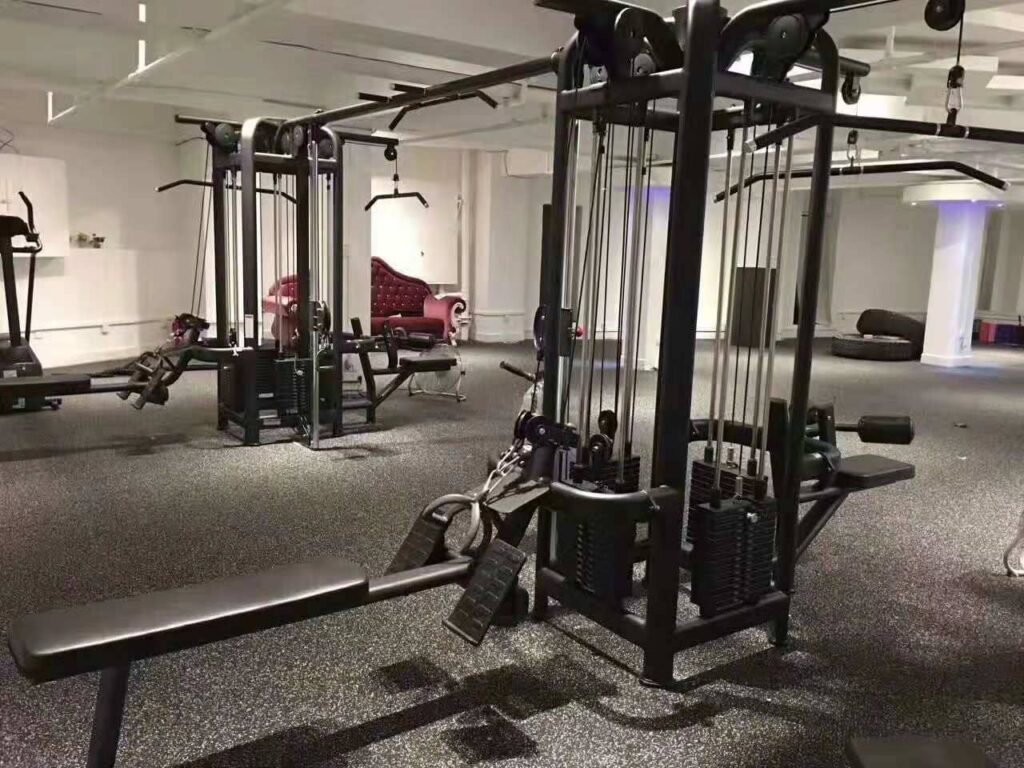
- Cable Machines/Functional Trainers: Offer resistance from many angles for complex movements.
- Plyo Boxes, Medicine Balls, and Sleds: For explosive and athletic training.
- Foam Rollers and Mats: For warm-ups, cool-downs, and improving flexibility.
What equipment is needed for a commercial gym?
Opening a new gym or updating a product line? A blank floor plan can be intimidating. Here is a foundational list to help you build a successful facility.
A commercial gym needs a core set of equipment to succeed. This includes a variety of cardio machines, a full range of free weights like dumbbells and barbells, several squat racks, adjustable benches, and a selection of selectorized strength machines.
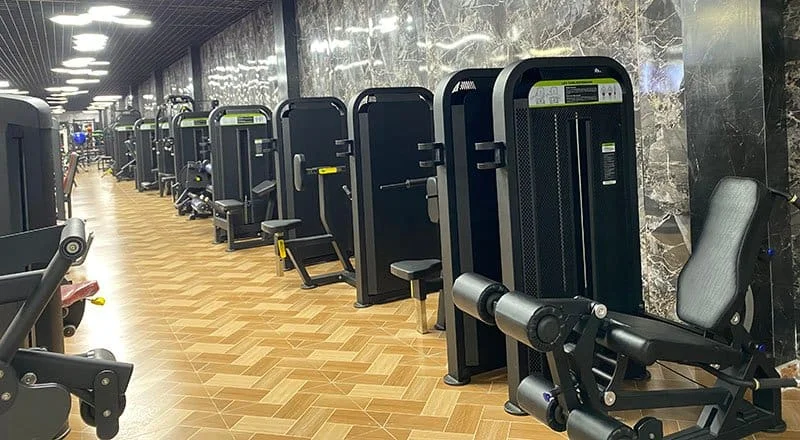
I remember working with a new gym chain owner who was trying to save money by under-equipping his free weight area. After just six months, he called us to place a much larger order. His members complained about waiting for racks and not having the right dumbbell weights. The lesson is clear: don’t compromise on the essentials. A well-equipped gym floor is your best marketing tool. Here’s how we advise clients to break it down.
The Cardio Zone
This area sees high traffic, so you need variety and durability. A good starting point is a mix of:
- 6-10 Treadmills
- 4-6 Ellipticals
- 4-6 Stationary Bikes (a mix of types)
- 2-4 Rowing Machines
The Strength Zone
This is where your brand’s reputation for quality is forged.
- Free Weights: This is non-negotiable. You need a full dumbbell rack (e.g., 5-100 lbs or 2.5-50 kg), commercial-grade barbells (we recommend 190K+ PSI steel for durability), and ample bumper plates. Having multiple Olympic benches (flat, incline, decline) is also critical.
- Racks and Cages: You need at least 2-4 power racks or squat stands. This is where your most serious members will train. We build ours from heavy-duty Q235 steel with precise 3D laser cutting and robotic welding to guarantee safety under extreme loads.
- Machines: A basic circuit of selectorized machines is essential for new members. This should include a Leg Press, Lat Pulldown, Seated Row, Chest Press, and Shoulder Press. Adding some plate-loaded machines can cater to more advanced lifters.
The Functional/Open-Floor Zone
This area provides flexibility. You’ll need turf or rubber flooring, kettlebells of various weights, medicine balls, plyo boxes, and resistance bands. A functional trainer or cable crossover machine is a perfect centerpiece here.
What is commercial grade gym equipment?
Wondering if “commercial grade” is just a marketing buzzword? It’s easy to be skeptical. I’ll show you exactly what it means for durability, safety, and performance.
Commercial-grade equipment is engineered for extreme durability and safety in high-use environments. It features superior materials like thicker steel, industrial bearings, and wear-resistant coatings. It’s built to withstand constant, heavy use by many people with minimal downtime.
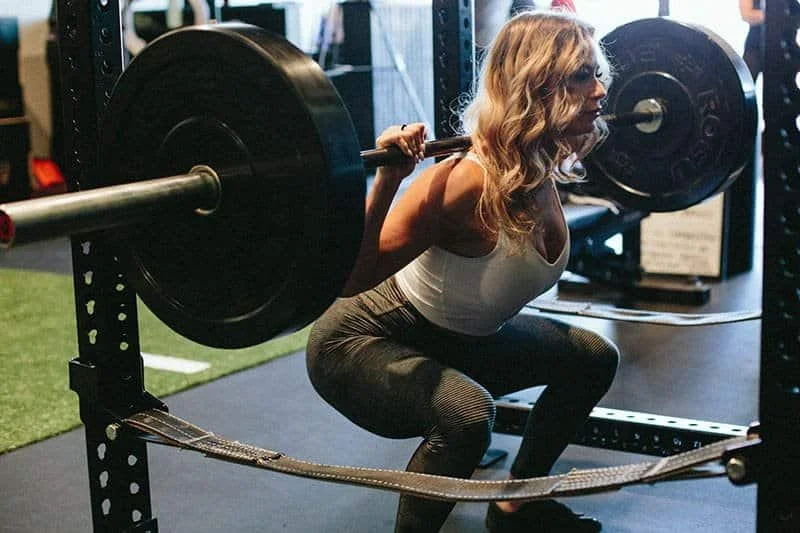
The difference between commercial and home-use equipment is like the difference between a professional chef’s knife and a basic kitchen knife. Both can cut, but one is designed for precision, performance, and a lifetime of heavy use. At our factories, “commercial grade” isn’t a label; it’s a set of strict engineering and manufacturing standards we follow for every single product.
Here are the key aspects that define commercial-grade quality:
Superior Materials and Construction
The foundation of any great piece of equipment is the material it’s made from.
- Steel: We use commercial-grade Q235 steel for frames, which is thicker and stronger than the steel found in home equipment. For our high-performance barbells, we use ultra-high-strength alloy steel (up to 230K PSI) to ensure they can handle repeated drops without bending.
- Hardware and Bearings: Commercial equipment uses industrial-grade precision bearings for smooth, reliable movement. Home gear often uses cheaper plastic bushings that wear out quickly.
- Coatings and Finishes: We use premium finishes like hard chrome, black zinc, and electrostatic powder coating. These are tested with salt spray to resist rust and cross-hatch tests to ensure they don’t peel, even in humid gym environments.
Rigorous Manufacturing and Testing
It’s not just the materials, but how you put them together.
- Precision Manufacturing: Our factories use technologies like 3D laser cutting and robotic welding. This ensures that every joint is perfect and every component fits with tolerances within ±0.5mm, which is critical for safety and a smooth user experience.
- Intense Durability Testing: Every product design has to pass our quality assurance tests. For example, squat racks are load-tested at 1.5 times their rated capacity. Barbells undergo 20,000-cycle drop tests to simulate years of high-intensity use.
What is the difference between a commercial gym and a regular gym?
You might think all gyms are basically the same. But for a product manager or owner, the differences are huge. Let’s explore what truly separates a commercial facility.
A commercial gym is a business built for high member traffic, requiring incredibly durable and versatile equipment. A “regular” or home gym is for personal use with lighter-duty gear. The core difference is the scale of use and the required engineering of the equipment.
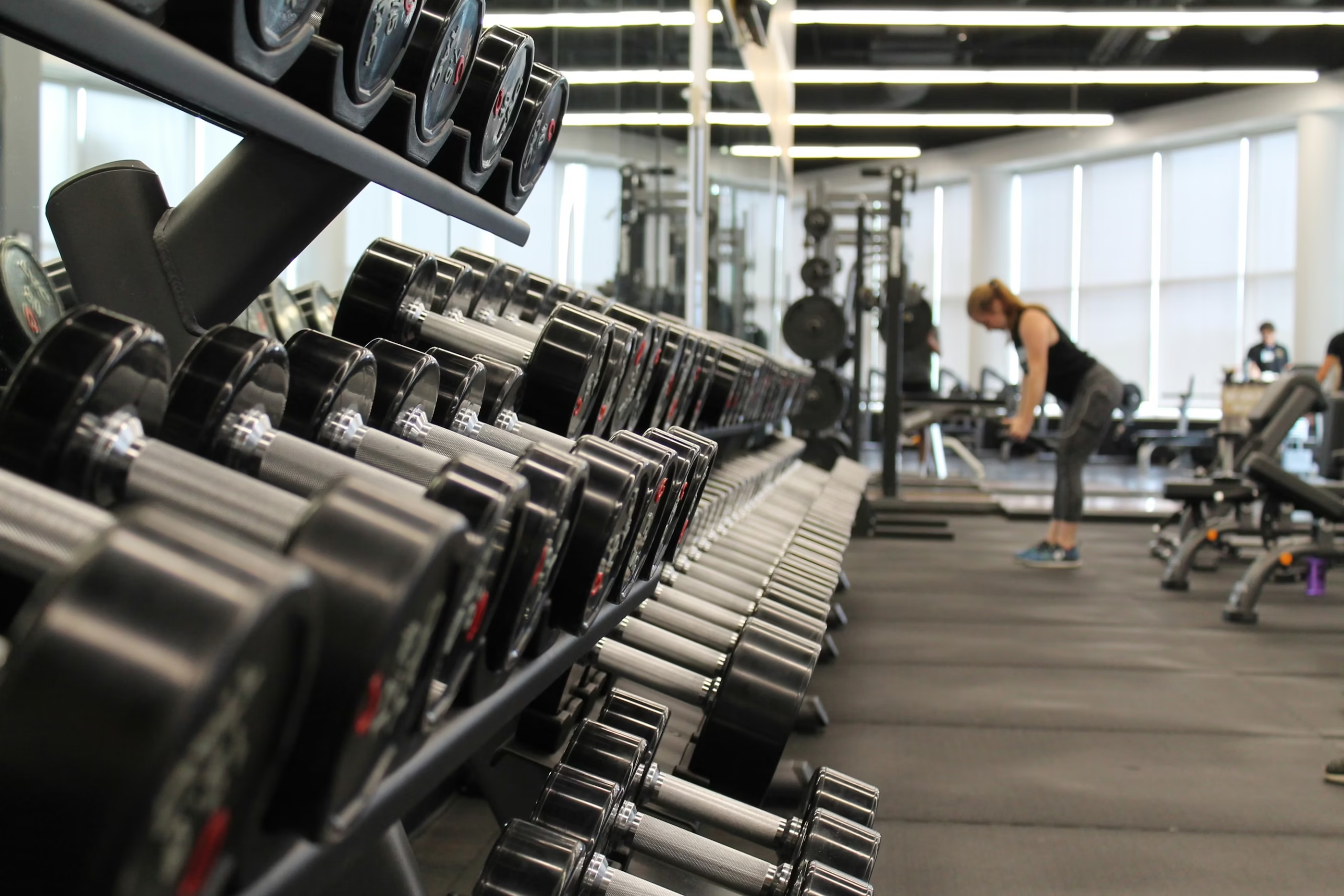
Thinking about the environment where your product will live is critical. A barbell in a garage gym might be used a few times a week by one person. In a commercial gym, that same barbell could be used by 30 different people in a single day, every day. This simple fact changes everything about how the product must be designed and built.
Let’s compare them side-by-side.
| Feature | Commercial Gym | Regular (Home) Gym |
|---|---|---|
| Purpose | Business serving hundreds or thousands of members. | Personal fitness for one or a few individuals. |
| Equipment | Commercial grade. Must be extremely durable, safe, and versatile. | Home grade. Lighter construction, fewer features, lower durability. |
| User Profile | All ages, sizes, and experience levels. Equipment must be adjustable and intuitive. | A specific user with known physical characteristics and goals. |
| Wear & Tear | Extreme. Runs 12-18 hours a day, 7 days a week. | Low to moderate. Used intermittently. |
| Safety & Liability | A major business risk. Equipment must meet strict safety standards (e.g., ASTM, CE). | A personal responsibility. Standards are less stringent. |
The main takeaway for a product manager is that you cannot place home-use equipment in a commercial setting. It will fail quickly, create safety hazards, and damage your brand’s reputation. Commercial gyms are demanding ecosystems. They require equipment that is not just strong, but engineered for constant, unpredictable use by a diverse population. That’s why our quality control includes checks that go far beyond what’s needed for home gear, like verifying steel composition with a spectral analyzer to ensure it meets our high standards.
Why is commercial gym equipment so expensive?
Have you ever experienced sticker shock when looking at commercial equipment prices? The high cost can be a barrier. Let’s break down exactly what you’re paying for.
Commercial gym equipment is expensive because of the premium materials, advanced manufacturing processes, and extensive R&D and testing required. You’re investing in long-term durability, user safety, and reliability, which results in a lower total cost of ownership.
As a product manager focused on profitability, I know you analyze every dollar. It’s tempting to source a cheaper alternative. However, the initial price tag is only part of the story. The real measure is the Total Cost of Ownership (TCO)1. A high-quality piece of equipment is an asset that pays you back over time. A cheap piece is a liability waiting to happen.
Here’s what goes into that price tag:
1. The Cost of Materials
This is the single biggest factor. Ultra-high-strength steel for a barbell can cost several times more than the generic steel used in a cheap bar. Industrial-grade bearings cost more than simple plastic bushings. High-density, tear-resistant upholstery is more expensive than thin foam and vinyl. You are paying for raw materials that will not fail.
2. The Cost of Advanced Manufacturing
Precision is expensive.
- CNC Machining: To get a perfect, consistent knurl on a barbell requires a CNC lathe. It’s more precise but also slower and more costly than manual methods.
- Robotic Welding: Using robots for welding power racks ensures every weld is identical and penetrates deeply for maximum strength. It delivers a level of consistency that is impossible to achieve manually at scale.
- Premium Coatings: Processes like applying a Cerakote ceramic finish or hard chrome plating are multi-step, technical applications that cost far more than a simple coat of paint.
3. The Cost of Rigorous Quality Assurance2
Before a product leaves our factory, it has been inspected at every stage. We test raw materials upon arrival, check dimensions during processing, and conduct brutal performance tests on the finished product. This comprehensive QA system requires skilled personnel and specialized testing equipment, adding to the cost. But it guarantees that what you receive meets international standards and protects your brand from product failures.
Ultimately, you are paying for peace of mind and a better return on investment. A machine that never breaks down keeps your members happy and eliminates the cost of repairs and downtime.
Conclusion
Choosing the right commercial equipment is an investment in durability, safety, and your brand’s reputation. This focus on quality is the key to creating a successful and profitable fitness business.