
Stuck doing endless crunches but seeing little change in your core strength or definition? This approach often leads to a weak midsection and can even risk back pain. But using the right equipment transforms your core workout into a powerful, stability-building session.
To truly build core strength, the best equipment includes suspension trainers, kettlebells, and cable machines. These tools challenge your stability, forcing your core to work in multiple planes of motion, which is far more effective than just doing simple crunches.
Many of our clients, product managers like Sarah, want to develop equipment that delivers real results. They know that a strong core is the foundation of all strength. The problem isn’t a lack of effort but a lack of the right tools and knowledge. Once you understand that the core’s main job is to stabilize your spine, you can start training it effectively. Let’s dive into the equipment that makes this possible and explore how to use it for maximum impact.
What Equipment Is Truly Essential for Core Training?
You want a rock-solid core, but your gym is crowded or your home space is limited. You need gear that provides the most benefit without taking up the whole room. How do you choose?
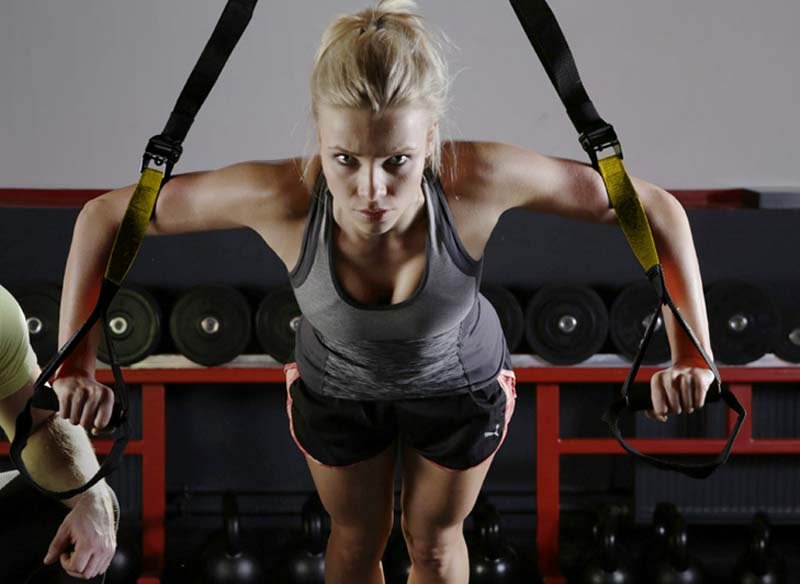
For pure versatility and effectiveness, suspension trainers are a top-tier essential. They leverage your body weight and instability to challenge every core muscle, making them an all-in-one solution. Kettlebells and Ab Rollers are also incredibly efficient and compact essentials.
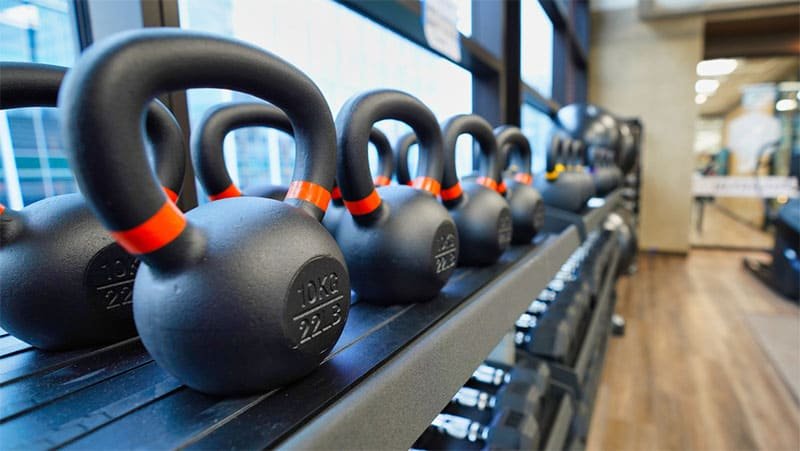
When we consult with brands on product development, we always start with the foundational tools that offer the highest value. These are the essentials. A Suspension Trainer1 is perhaps the most functional core tool ever invented. Because you are suspended, your core must fire constantly to prevent you from wobbling. Every push, pull, or plank becomes an intense core exercise. We manufacture these with high-grade webbing and secure carabiners because safety and stability are non-negotiable. An Ab Roller2 is another favorite. It’s a simple design, but it’s brutally effective for training anti-extension—the ability to keep your spine from arching. The key is in the wheel’s stability and the handle’s ergonomic design, details we obsess over. Finally, the Kettlebell is essential for dynamic power. Movements like the swing teach your core to transfer force from your hips through your torso, which is fundamental to almost every athletic movement.
| Equipment | Primary Core Function | Versatility | Space Required |
|---|---|---|---|
| Suspension Trainer | Full Core Stabilization | Very High | Low |
| Kettlebell | Dynamic Power & Stability | High | Low |
| Ab Roller | Anti-Extension | Low | Very Low |
What Gym Exercises Best Work the Core with This Equipment?
You have the equipment, but you’re still relying on the same old sit-ups. This means you are missing the deep stabilizing muscles that build a truly powerful and resilient core.
The best core exercises are compound movements that force you to resist force. This includes Turkish Get-ups with a kettlebell, Pallof presses on a cable machine, and body saws on a suspension trainer. These build stability, not just flexion.
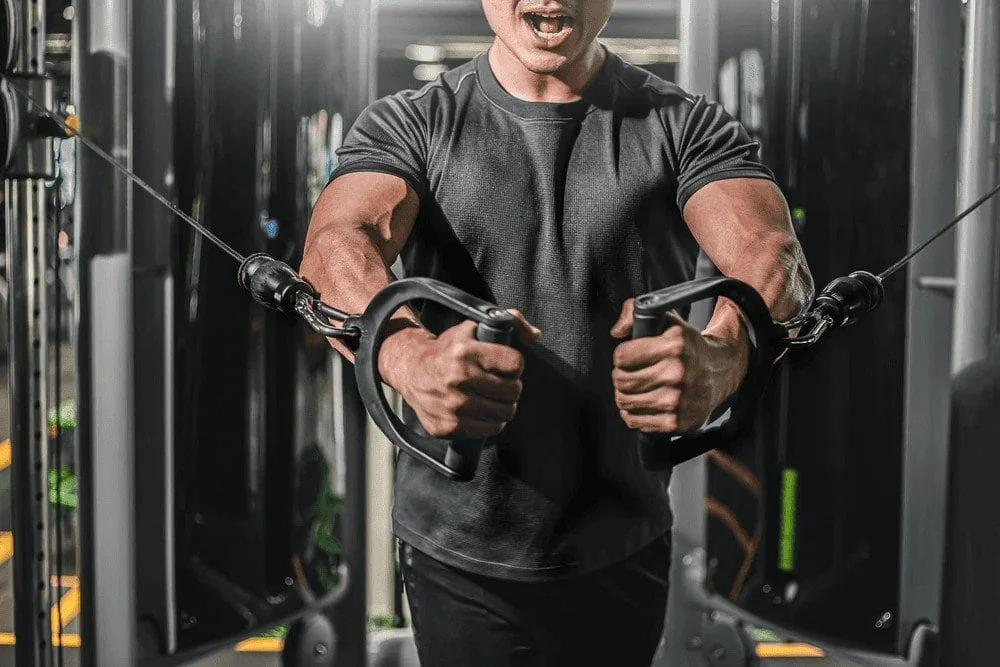
Let’s move past simple movements and into exercises that build functional strength. I remember working with a German fitness brand that wanted to launch a new line targeting functional training. We focused their entire core series around machines that enable anti-movement patterns.
Taming the Cable Machine
The cable machine, or functional trainer, is the king of anti-rotation training3. Its adjustable pulley allows you to create resistance from any angle, forcing your core to brace against a rotational pull.
- Pallof Press4: This is the ultimate anti-rotation exercise. You stand sideways to the machine, hold the handle at your chest, and press it straight out. The machine tries to twist you back, and your core has to fight to stay perfectly still.
- Cable Wood Chops: This is a more dynamic movement where you pull the cable from high to low (or low to high) across your body, controlling the rotation.
Mastering Dedicated Core Stations
These machines are designed to isolate specific parts of your core.
- Captain’s Chair (Vertical Knee Raise Station)5: Excellent for targeting the lower abdominals without straining your lower back. By raising your knees or legs, you engage the rectus abdominis powerfully. We’ve found that the angle of the back pad is critical for user comfort and effectiveness.
- Roman Chair (Hyperextension Bench)6: This is for your posterior core—the lower back, glutes, and hamstrings. Strong back extensors are just as important as strong abs for a healthy spine.
Beyond the Gym, What’s the Best Training for a Strong Core?
Do you think a powerful core is only forged in the gym? Many athletes build incredible midsection strength without ever doing a dedicated “ab workout.” Their secret is hidden in how they move.
Sports that demand constant balance, rotation, and stability are best for building a strong core. Gymnastics, martial arts, and swimming develop phenomenal core control because the core is always engaged to transfer force and maintain proper body position.
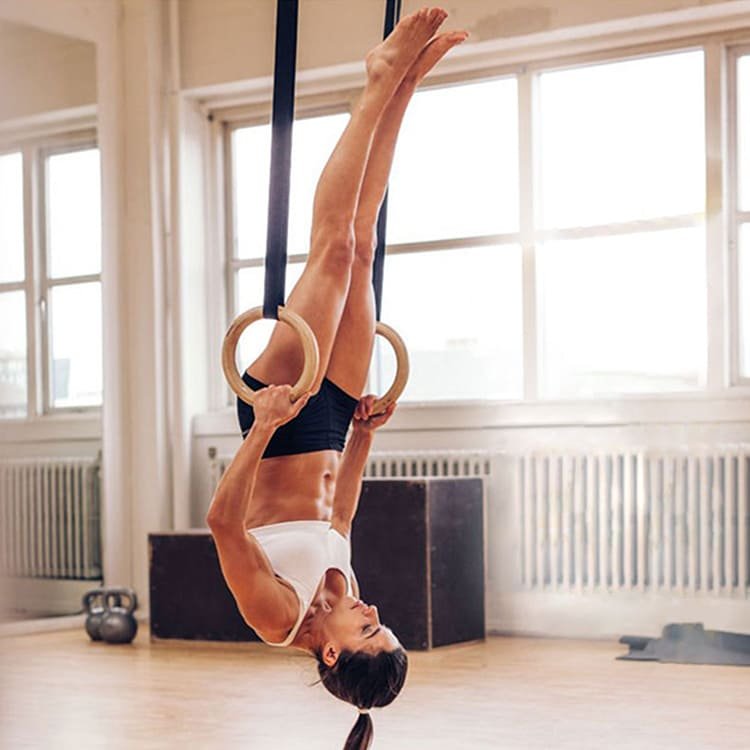
The core’s primary job in the real world is to stabilize the spine and transfer power between the lower and upper body. Sports are the ultimate test of this function. Take gymnastics, for example. Holding an iron cross on the rings requires a level of full-body tension and core stability that is almost unmatched. This is why suspension trainers are so effective—they bring a small piece of that instability training to everyone. Similarly, martial arts like judo or wrestling are essentially live-action anti-rotation and anti-flexion training. You are constantly bracing your core to resist an opponent’s attempts to pull or twist you off balance.
Even kettlebell training evolved into its own sport (Girevoy Sport), which is a testament to its effectiveness. The snatch and the clean and jerk, performed for high repetitions, build incredible core endurance. The lesson here is that the best core training is often integrated into full-body movements. We use this principle to engineer equipment that encourages a more holistic, functional approach to strength.
But What If I Want a Single Piece of Equipment for My Whole Body?
Buying dedicated equipment for every muscle group is expensive and takes up a lot of space. You want one solution that can truly work your entire body, including your core. Is that even possible?
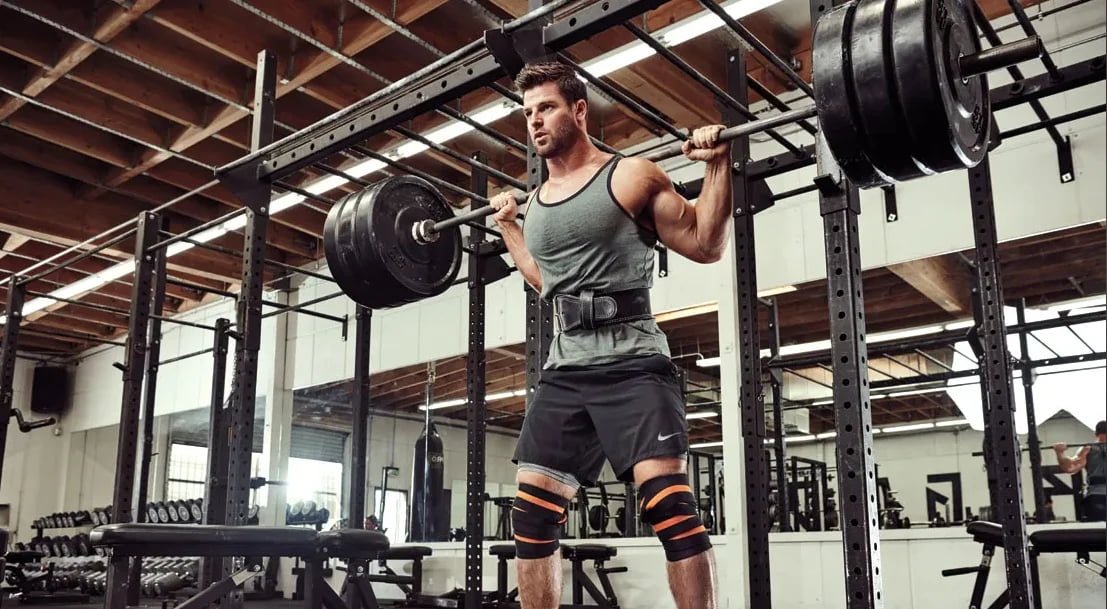
A high-quality barbell and weight plates, paired with a sturdy squat rack, is the ultimate full-body training solution. Compound lifts force your core to stabilize your entire body under heavy load, providing unparalleled strength gains from head to toe.
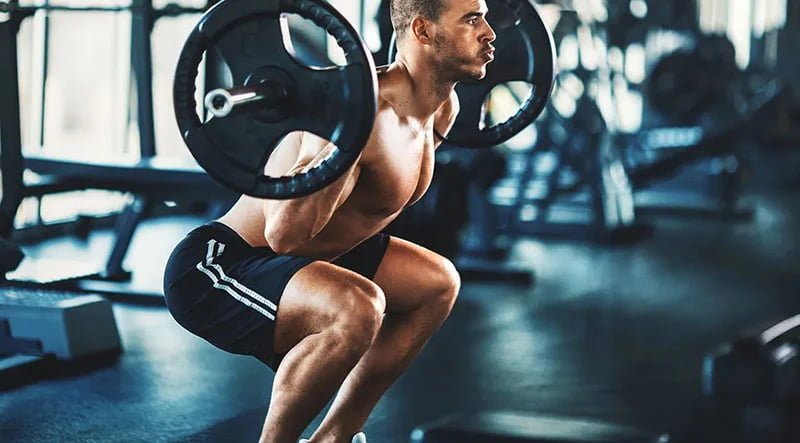
At its heart, our business is about precision manufacturing for heavy-duty training. Nothing exemplifies this more than a barbell and rack. Lifts like the squat, deadlift, and overhead press are the most effective full-body exercises, and they are also phenomenal core workouts. When you have a heavy barbell on your back for a squat, your core has to create a rigid pillar of stability to protect your spine. This is not optional; it’s a requirement for a safe and effective lift.
This is why we focus so heavily on the specifications of our products. Our barbells use 190K+ PSI tensile strength steel with precision CNC knurling to ensure a secure grip and controlled whip. Our power racks are subjected to static pressure tests at 1.5 times their rated load. This commitment to quality ensures the equipment can handle the full-body demands of heavy compound lifting, where the core is the critical link in the chain. For those wanting a different kind of versatility, a high-quality functional trainer with dual cable pulleys is a very close second, allowing for hundreds of exercises for the entire body.
Out of Everything, What Are the Big 3 Core Exercises?
You’re short on time and want to focus on what brings the most benefit. With thousands of exercises floating around, it’s hard to know which ones give you the most bang for your buck.
The “big 3” for a healthy, powerful core are the Plank (for anti-extension), the Side Plank (for anti-lateral flexion), and the Pallof Press (for anti-rotation). These train your core for its primary job: stabilization.
These three movements directly counter the main forces placed on the spine, building a 360-degree shield of muscle. When we work with product managers, we often reference these fundamental movements to explain why certain equipment features are so important.
1. The Plank (Anti-Extension)
This exercise’s main goal is to prevent your lower back from arching or sagging. It teaches your abdominals to brace isometrically. You can make it harder by placing your feet in a suspension trainer or resting your forearms on a Swiss ball to add instability.
2. The Side Plank (Anti-Lateral Flexion)
This targets the obliques and quadratus lumborum, muscles critical for preventing your torso from bending sideways. It protects your spine during unilateral (one-sided) movements like carrying a heavy object in one hand.
3. The Pallof Press (Anti-Rotation)
As discussed, this is the gold standard for anti-rotation. It directly trains the muscles that stop your torso from twisting uncontrollably. This is crucial for rotational sports like golf or tennis and for general spinal health. This exercise requires a resistance band or a cable machine, highlighting the need for versatile equipment.
So, How Do I Actually Make My Core Stronger?
Knowing all the right exercises is just the start. Making real, measurable progress week after week is the real challenge. Many people hit a frustrating plateau and simply stop getting stronger.
To make your core stronger, you must apply the principle of progressive overload. This means systematically increasing the difficulty by adding resistance, holding for longer, or choosing harder exercise variations. Consistency is essential.
Progress is the result of a deliberate plan. As engineers and manufacturers, everything we do is systematic, and your training should be too. Just showing up is not enough.
Principle 1: Progressive Overload in Practice
You must consistently give your muscles a reason to adapt and grow stronger. Don’t just do a 60-second plank every day for a year. Make it harder over time.
| Progression Method | Plank Example | Pallof Press Example |
|---|---|---|
| Increase Duration/Reps | Hold for 75 seconds | Do 15 reps instead of 12 |
| Add Instability | Place feet in a suspension trainer | Stand on one leg |
| Add Load/Resistance | Place a weight plate on your back | Increase the weight on the cable stack |
Principle 2: Train for Function, Not Flexion
Focus most of your energy on the “Big 3” style of movements: anti-extension, anti-lateral flexion, and anti-rotation. This is how your core works in daily life and in sports. Crunches have a place, but they shouldn’t be the foundation of your training.
Principle 3: Quality and Control
Every repetition should be deliberate. Feel the target muscles working. It is far better to do 8 perfect reps than 20 sloppy ones. And remember to breathe. Brace your core and exhale as you exert force to maximize stability.
Conclusion
Building a strong core isn’t about endless crunches. It’s about using the right equipment for stabilization exercises—like planks, presses, and swings—and consistently challenging yourself with progressive overload.
-
Explore this link to understand how a Suspension Trainer can enhance your core strength and overall fitness. ↩
-
Discover the effectiveness of the Ab Roller in core training and why it’s a must-have for fitness enthusiasts. ↩
-
Understanding anti-rotation training can enhance your workout effectiveness and core strength. ↩
-
Learning the proper technique for the Pallof Press can maximize your core stability and strength. ↩
-
Explore the benefits of the Captain’s Chair to enhance your core workout routine effectively. ↩
-
Discover how the Roman Chair can strengthen your lower back and improve overall core stability. ↩